

Cleansing has always been a force for transformation—one of humanity’s oldest responses to rupture. Across history, it has shaped how societies maintain health, restore balance, and reorient in times of change: from ancient hygiene practices that redefined public health; to systems that increased “efficiency” and more importantly, safety; to consciousness-raising movements that sought to clear away empire while deepening collective bonds for survival. And yet, this same language has also been weaponized, where cleansing and systemic cultural erasures reveal how easily the impulse to cleanse is distorted into traumatic exclusion and unrelenting intergenerational tragedy.
In 15th century Spain, limpieza de sangre—“purity of blood”—became a mechanism of exclusion, weaponized against Jews and Muslims forced into conversion. Lineage was surveilled and punished, severing cleansing from its roots in healing and transforming it into a political tool of domination. This history remains woven into Jewish–Muslim relationships—where food, and the denial of food, is entangled with memory, exile, war, and survival. The language of cleansing must be reclaimed as sacred, intentional, and rooted in contextual awareness. This includes an understanding of power, and a careful relationship to restraint, abundance, and choice.
Very different from the $71 billion detox industry that has reduced cleansing to a trend of juicing, or fasting on lemony maple concoctions, rather cleansing functioned as a layered system—designed to move what is stuck, restore flow, and recalibrate the relationship between the inner and outer landscapes. But cleansing extends far beyond the power to heal, restore, and elevate by removing toxins, clearing energy, and reordering perception—it has the power of collective-care and repair when aligned in solidarity, and rooted in intentionality.
Across traditions, cleansing emerges as a shared technology of survival, devotion, and repair. Muslims have just completed the 30-Day Ramadan fast, cleansing the body during daylight hours (unimaginably brutal while under the anguish of war). In many Indigenous cultures across the Americas, plant-based purging ceremonies support physical cleansing and spiritual release. In South Asian lineages, Panchakarma and Ayurvedic detoxification clears toxins from the digestive tract. Within Latin American healers, curanderismo, hold limpias—ritual cleansings using herbs, smoke, eggs, and prayer—draw out intrusive or stagnant energies to restore coherence. Across Africa, the Mediterranean, and the Middle East, smoke cleansing and ritual bathing purify body and space. All of these practices arise from a shared understanding: what is unprocessed accumulates, and what accumulates shapes perception, behavior, and possibility of the collective.
Jewish teachings from Sefir Yetzirah suggest that the body is where memory and meaning live. The ancient agrarian Hebrew calendar encodes cleansing as foundational and structural throughout our cycles. We “cleanse” in a mikveh (immersion in living water) before ceremony, or after sacred transition. We “cleanse” before meals, netilat yadayim (ritual handwashing). These practices urge re-entry into our lives with fresh awareness and refined attention to what we are carry, and what we release. There are times of restraint and scarcity that sharpen awareness, and times of abundance that restore connection. On six fast days throughout the year, eating or refraining from food with intention are parallel practices of alignment that explore how all that enters or is withheld from the body, shapes not only health, but consciousness, relationship, and responsibility toward community-care.

And Passover stands as the most comprehensive ritual of cleansing we inherit: the removal of gunk, or Hametz (shmutz, crap, stuff). A candlelit, feather-in-hand pre-Passover ritual of decluttering to clearing crumbs from our homes is a deliberate emptying of our shelves to offer what has fermented, expanded, and taken up too much space. To release and clear the forgotten corners of home and hearth—with a focus on our kitchens and closets—is not merely to restrict yeast, legumes, and grains for better health. It is inextricably woven into a quest toward collective liberation. By relinquishing the personal, internal constrictions on an embodied journey, we mirror getting rid of the symbolic external accumulations that enslave us.
To reclaim cleansing at our Seder tables and beyond this Passover is to refuse the symbolism of cleaning kitchens for a few days without changing mindset or organizing for systemic change. It is to refuse “purity” as an ethnic weapon, and return it as a lineage practice that reconnects us to sacred ground, to balance, and to regeneration. It is to eat perennial bitter greens from our Seder plates, note their impact on digestion, and move throughout the holidays of liberation remembering that our traditions hold parallel wisdom about embodied restraint and nourishment, with our responsibility to one another through collective-care.
This becomes especially potent in the 49 days of Counting the Omer (a sheaf of grain), between Passover and Shavuot—a deliberate path of refinement. Each day invites us to recalibrate the inner landscape: lovingkindness, discipline, harmony, endurance, humility, connection, sovereignty.
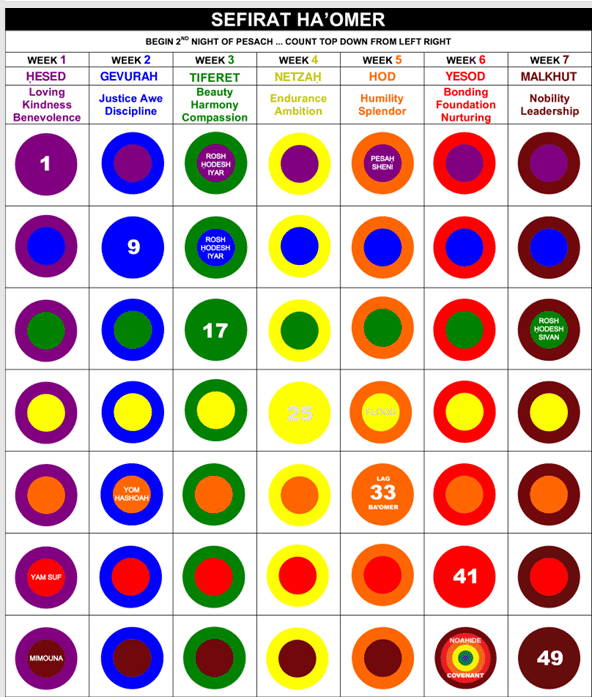
In counting the Omer, each of the 49 days becomes a pivot point for conscious decision: what food and media am I consuming, and what actions am I taking in response. We cleanse because our “bodymind” need this nourishment to reduce its inflammatory load. By choosing foods that reduce inflammation and increase clarity—wild greens, bitter herbs, simple nourishment that supports the body’s capacity to digest and process this world—it becomes easier to attune to subtle changes in how we show up.
We cleanse to walk our talk as stated in the Maggid, so that all who are hungry may come and eat. This is a directive that shapes a moral obligation and calls us deeper into the symbolism of food access and mutual-aid. These words refuse the privilege of separating between spiritual life and political realities. The 49 days between Passover and Shavuot offer a container to live into this directive with rigor. Through gathering around ritual tables, knowing people are hungry for basic calories, we cannot atrophy and gaze only at our own navels. But by engaging cleansing as a sacred practice, we learn to hold all of this at once at our core.
When we are unable to stop “consuming” or begin to “digest” the grotesque images of war, and when criminal politicians continue to “hunger” to sell weapons and control more resources, Israelis and Jews, default as objects of antisemitic ire—from the halls of power to streets around the world. For my own beloved Israeli brother — four kids at home unable to attend school or work — racing into shelters multiple times a day, gathering food, screens, guitars and whatever they can carry, returning to eat under looming threat. Eating in a bomb shelter (if you are lucky enough to have one), is emotionally fraught, a spiritual act, a celebratory commitment to finding quality ways to connect and remain hopeful among family and neighbors during war. My Israeli Jewish and Muslim friends share a palpable “hunger” to end this endless bloodshed.
All the while Palestinian, Lebanese, and Iranian people face the devastation of sustenance itself. They question where to find food, and whether there is anything left to eat. They cleanse, but it’s not a choice. Because war destabilizes global food systems, raising prices on global fresh food-prices due to the increased cost of agricultural fertilizer. Widespread obstruction of food aid under Israel’s draconian blockades has forced the Gazan majority into food insecurity and malnutrition, and now they are left to boil weeds, (Mallow, Malva sylvestris, will be added to our Seder plate this year). They are also grinding animal feed and corn into flour, and stretching one piece of bread across a day for a whole family. In the West Bank, settler youth have full impunity to cleanse fields of homes, decimate Palestinian agricultural life—mature olive trees uprooted, harvests stolen, cisterns and irrigation dismantled, livestock tortured and killed. The ensuing hunger is structural and systematic, not incidental.
Join the annual 49-Day Regenerative Spring Cleanse—an online, mystical, communal sojourn with FromSoil2Soul to learn from the Tree, a sacred path back to balance. A ritual of cleansing is a practice of solidarity.
For seven years, I have guided this transformative cleanse practice and witnessed how it sharpens the inner compass, reshapes habits, strengthens discernment, and restores agency. For 49-Days, choosing foods that reduce inflammation and increase clarity—wild greens, bitter herbs, simple nourishment—supports the body’s capacity to process food, and the realities of war. By engaging daily meditation and inquiry, we increase consciousness and presence: Where am I resourced enough to give? How do my habits—of consumption, attention, silence—participate in or resist war efforts that starve decency, and systematically produce mass-scale hunger?
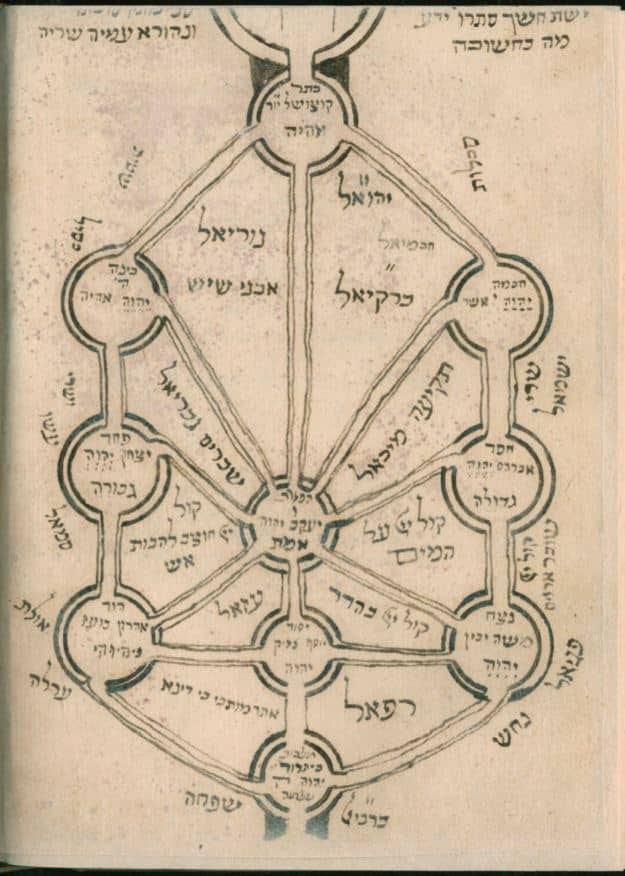
In the ancient pathway—from the fruits to the roots of the Tree of Life—cleansing builds the somatic resilience required to stay present to complexity, and to remain committed to showing up for collective liberation, loud and proud, clean and clear.
Hit reply to learn more and join this 7-session pilgrimage, weekly over the 49 day journey from Liberation to Revelation. You’ll receive recipes, herbal protocols, a guided framework, and a chance to join a weekly 90-minute intimate online container that I’ve been guiding for the past 7 years. As always, payment plans and partial scholarships are available.